1
/
of
6
Sammler-Uhren
Original Peter Henlein Nuremberg Egg Junghans 1st Pocket Watch in the World Replica mech.
Original Peter Henlein Nuremberg Egg Junghans 1st Pocket Watch in the World Replica mech.
Regular price
€245,00 EUR
Regular price
Sale price
€245,00 EUR
Keine Umsatzsteuer ausgewiesen wegen Differenzbesteuerung
Couldn't load pickup availability
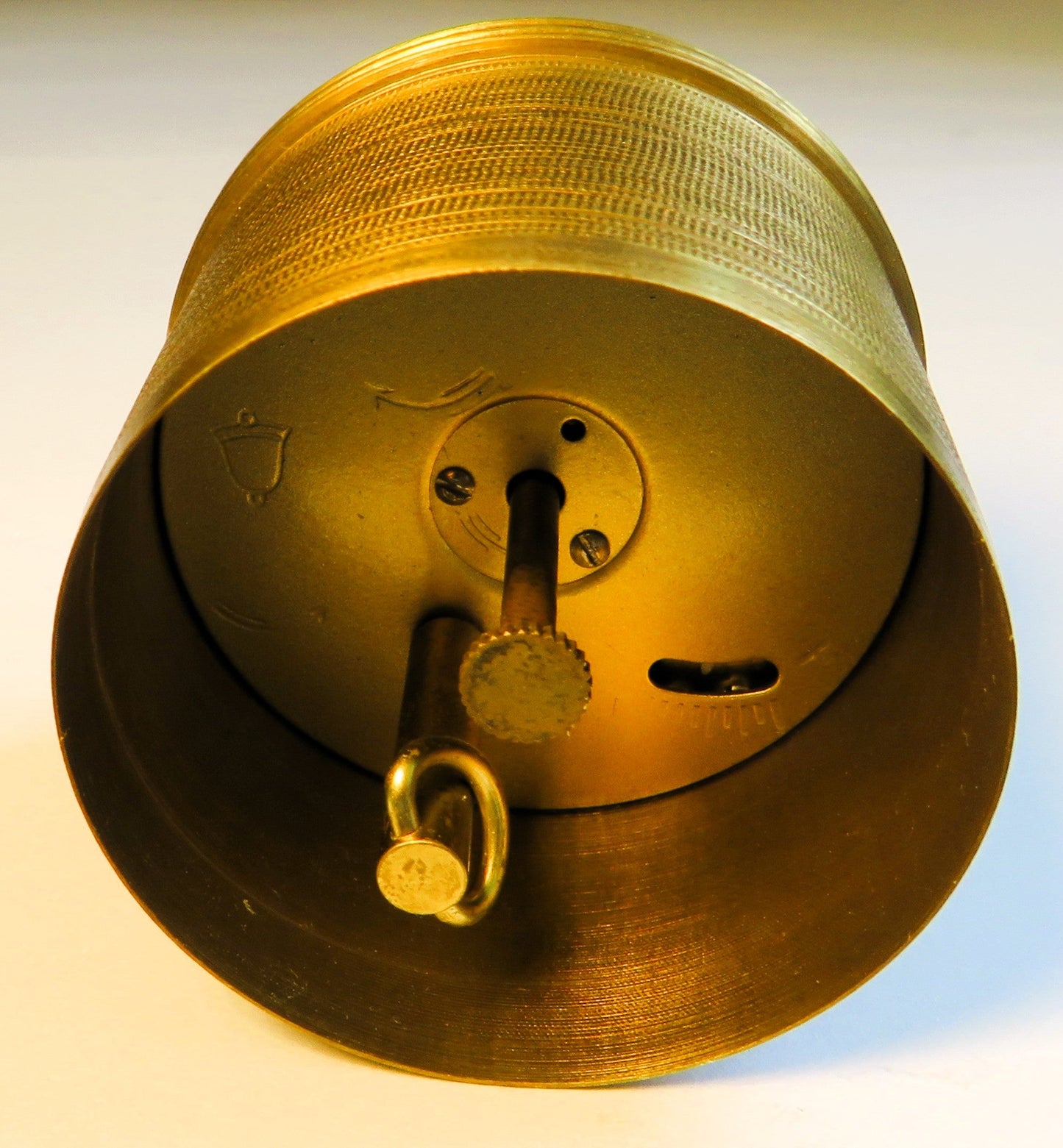
Facsimile Junghans replica of the world's first pocket watch by Peter Henlein from 1590, the famous "Nuremberg Egg" to be seen in the Germanic National Museum in Nuremberg, with a very rare mechanical hand-wound movement
Original size, original dial, original engravings on the dial and on the back: "PetrusHele me f. Norimb. 1590"
There are 2 different versions of these replicas on the collector's market, a very rare one with a mechanical movement and one with a Junghans quartz movement; the model in this offer is the rare mechanical movement
Item description:
A magnificent and unique piece of German and watchmaking history par excellence: the "Nuremberg Egg" by master watchmaker Peter Henlein
Built in 1590, this specimen represents the world's first portable pocket watch and can, of course, only be admired in the museum
In 1971, the Diehl company, also based in Nuremberg, produced a small number of detailed facsimile reproductions with the permission of the Germanic National Museum
This facsimile watch has a hand-wound movement, which of course has nothing in common with the original masterpiece that changed watchmaking history, as that filled the entire case
Like the original by Master Peter Henlein, the facsimile has no second display but only a 24-hour display
Dial diameter: 50mm, case height: 45mm, the facsimile case, like the original, is not cast but elaborately turned from brass
High-quality, rare collector's item in original material in facsimile quality with acquired age patina and engravings
Watch starts and runs (accuracy not tested)
Condition: 2 - normal, age-related signs of wear and storage, starts and runs
Peter Henlein and the "Nuremberg Egg" (Source: Wikipedia):
"Nuremberg Eggs" used to refer to pocket watches with a spring mechanism and an oval shape. Nuremberg was home to the world's best craftsmen and fine smiths in the late and outgoing Middle Ages.
Origin of the name
However, the designation "Ei" (egg) probably does not come from the shape of the watches, but is likely a corruption of "Aeurlein," meaning "little watch." Although they were often attributed (also in belletristic literature) to the Nuremberg precision mechanic Peter Henlein, since he produced the first portable watches around 1510. However, there are doubts that he was the originator of the Nuremberg Eggs, because the first datings are around 1550 after his death (1542). Peter Henlein built watches in the form of tall cylindrical cans and small spheres in pomander form. The known egg-shaped watches only originate from the second half of the 16th century and are not to be associated with Peter Henlein.
Regulation with Torsion Pendulum
The portable watch became possible only with the invention of the mainspring before 1430. This allowed the large weight-driven clocks to be miniaturized and, for example, placed on a table. The exact timing of further miniaturization is disputed. There are reports from Italy in the late 15th century that suggest portable watches. It is certain that since Peter Henlein, they could be housed in a case only hand-sized. The invention of the mainspring and the torsion pendulum as a timekeeper was often attributed to Peter Henlein, but such escapements were already used in the early 15th century. At the latest, however, Henlein ensured the miniaturization.
The uniformity of the oscillation determines the accuracy of the watch. However, because the deflection of the torsion pendulum is influenced by every movement of the wearer, the watch movement was quite irregular. Only the escapement patented by Christiaan Huygens in 1657 using a balance wheel and spiral spring improved the daily watch rate to about 10 seconds